Skip to header Skip to main navigation Skip to main content Skip to footer
Scott Lawson
Your next upgrade lives here

Research

An AI System Proves an 18-Year-Old Quantum Conjecture, and a Computer Checks Every Step
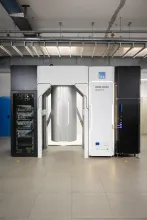
The Euro-Q-Exa quantum computer at the Leibniz Supercomputing Centre in Garching, Germany.

A research system built by Physical Superintelligence, a laboratory known as PSI, has produced a proof of the Aaronson-Ambainis conjecture, a central open problem in quantum computing that had stood since 2008. PSI announced the result on Friday, saying that its internally developed system, running instances of a non-public Anthropic model on PSI's own infrastructure, had a complete proof during the third day of the run. The proof was then accepted by Lean, a proof assistant that checks every logical step by computer.
  • Read more about An AI System Proves an 18-Year-Old Quantum Conjecture, and a Computer Checks Every Step

METR Finds Anthropic Is Improving Its AI Models About Twice as Fast, Mostly by Using AI Itself

Anthropic is now improving its AI models at about twice the pace it managed before late 2025, and most of that acceleration appears to come from the company using AI to help build AI. That is the central finding of an independent assessment published on November 5 by METR, a nonprofit that evaluates frontier AI systems, after its staff spent eleven weeks examining Anthropic's internal research process.

  • Read more about METR Finds Anthropic Is Improving Its AI Models About Twice as Fast, Mostly by Using AI Itself

OpenAI's AI Pipeline Found 948 Ways Into Linux Root and Wrote a Patch for Each

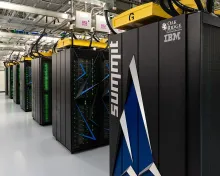
The Summit supercomputer at Oak Ridge National Laboratory, a Linux-based system of the kind the Linux kernel underpins.

OpenAI has published the results of a striking security experiment: an autonomous pipeline powered by an upcoming cyber model scanned the Linux kernel, proved hundreds of vulnerabilities were real, built working exploits for them, and drafted a patch for each one. In a single mid-October run, the system produced 948 distinct local privilege escalation vulnerabilities, the kind of flaw that lets an ordinary logged-in user gain root access, the highest level of control on a Linux machine.

  • Read more about OpenAI's AI Pipeline Found 948 Ways Into Linux Root and Wrote a Patch for Each

Anthropic's Clark Tells IMF AI Could Lift US Output to 44 Trillion Dollars by 2030

The Queen Sirikit National Convention Center sign in Bangkok, the venue for the 2026 IMF and World Bank annual meetings.

Anthropic co-founder Jack Clark told government and finance officials in Bangkok on Saturday that artificial intelligence could expand United States economic output to 44 trillion dollars by 2030, almost 50 percent above its current level of just over 30 trillion dollars. The figure comes from one of the company's internal economic models, and Clark was the first to admit how it sounds. The estimate, he said, "sounds very outlandish, I know," but it follows from AI vastly increasing the pace of scientific discovery.

  • Read more about Anthropic's Clark Tells IMF AI Could Lift US Output to 44 Trillion Dollars by 2030

Claude Designs Quantum Circuits That Beat the Best Published Versions, Cutting Gates Up to 17-Fold

The gold chandelier-like interior of a quantum computer cryostat, showing its layered wiring and cooling stages.

Anthropic says its Claude Mythos 5 model has designed quantum circuits that improve on the best previously published versions, in some cases by an order of magnitude or more. In a research post published on October 16, 2026, the company reported that Claude, working in a closed loop with an automated evaluator and largely on its own, took on eight computational primitives — the basic routines from which larger quantum algorithms are built — spanning chemistry, optimization, quantum simulation, number theory and numerical computing.

  • Read more about Claude Designs Quantum Circuits That Beat the Best Published Versions, Cutting Gates Up to 17-Fold

Nvidia Pledges 250 Million Dollars in Compute for UK AI Agent Safety Research

Cartoon illustration of UK university researchers testing a small robot and AI agent beside glowing servers with a protective shield overhead.

Nvidia announced on Wednesday, October 14, a five-year donation of computing resources valued at 250 million dollars to strengthen research in the United Kingdom into the safety and security of agentic AI.

  • Read more about Nvidia Pledges 250 Million Dollars in Compute for UK AI Agent Safety Research

400 Scientists Call for an International Watchdog for Advanced AI

Cartoon scientists from around the world watch over a friendly robot sealed safely inside a transparent containment dome beside a globe.

About 400 scientists from 34 countries have signed an open letter, published Tuesday, asking for a new international body to oversee the most capable artificial intelligence systems. The signatories include Geoffrey Hinton and Yoshua Bengio, two of the researchers who shared the 2018 Turing Award and helped shape modern deep learning. Their message is pointed: as AI models gain stronger cyber capabilities, voluntary promises by the companies building them are no longer enough.

  • Read more about 400 Scientists Call for an International Watchdog for Advanced AI
Subscribe to Research

Copyright © 2026 Rocky Mountain Madman LLC - All rights reserved

Developed and Designed by Rocky Mountain Madman LLC