One of the most famous unsolved problems in mathematics may have fallen, and the verification did not come from the company that announced it. Independent mathematicians have certified a proof of the Riemann hypothesis developed by Anthropic mathematician Levent Alpöge working with Claude, after checking the work in the Lean proof system.
Alpöge announced the result on November 20, writing, in his own summary of the claim, that he believed he had, working with Claude, discovered a proof of the Riemann Hypothesis. He said the work also establishes the Generalized Riemann Hypothesis, which extends the original problem to a broader family of functions. According to USA Today, he worked with Claude for approximately six weeks and released the argument as computer code written in Lean.
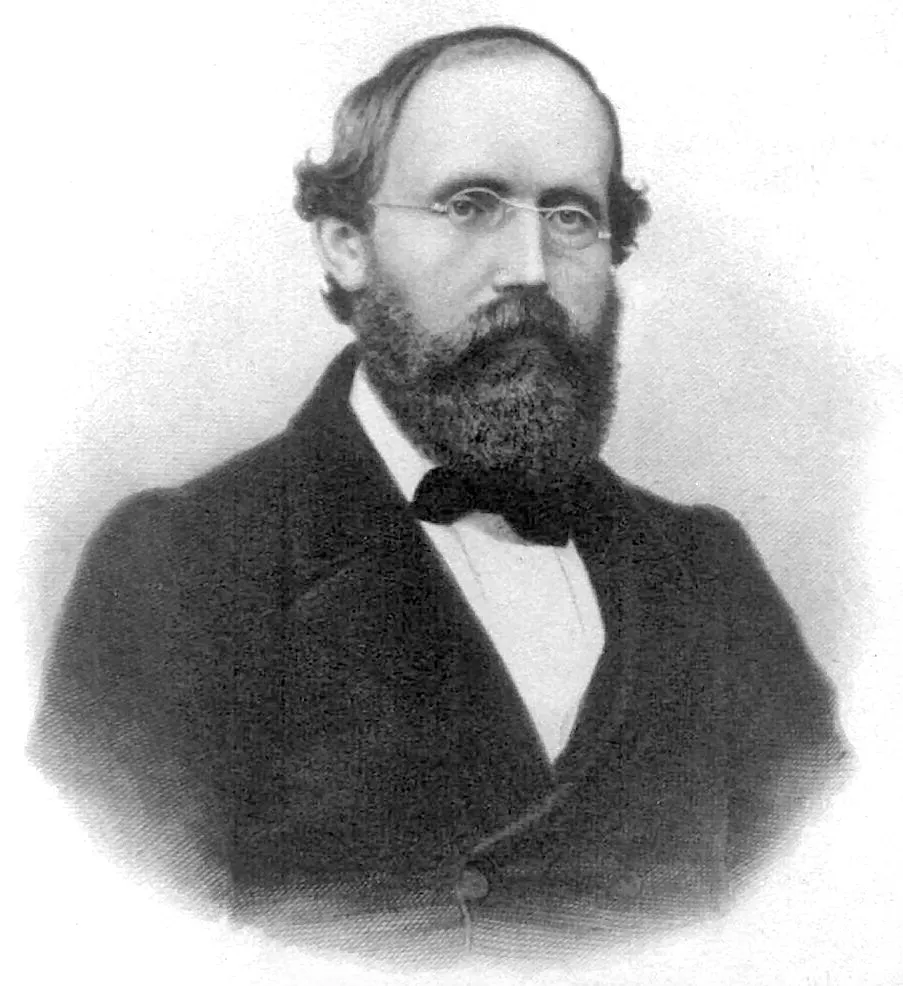
The hypothesis itself dates to 1859, when Bernhard Riemann proposed a hidden pattern underlying the distribution of prime numbers, the numbers divisible only by themselves and by one. Prime numbers appear irregularly along the number line, yet the hypothesis describes a precise relationship that would help explain how frequently they occur. The problem is one of the seven Millennium Prize Problems selected by the Clay Mathematics Institute, which offers a prize of one million dollars for a correct solution to each problem.
What changed over the weekend was independent checking. On November 21, the Lean Focused Research Organization and the Mathlib Initiative announced that they had independently verified the proof using mathematical software and had full confidence in its correctness. In a joint statement reported by Scientific American, the Lean and Mathlib communities said they certify that both the statement and the proof of the Riemann Hypothesis are correct.
That certification addressed two obvious concerns. The first was whether the Lean code proved the actual Riemann hypothesis rather than a subtly different statement. The communities checked that the code proved the correct mathematical statement. The second was whether the code merely compiled on the author's own setup. Independent researchers, including Andrew Sutherland of the Massachusetts Institute of Technology, separately compiled the result in Lean without issues. Sutherland said the proof had been compiled and independently rechecked by the Lean kernel with only the three standard axioms, and that the chance anything was fishy was approximately zero. Scientific American also reported that a comparator run, the check that the code does not redefine symbols or change the meaning of the hypothesis, has now been completed.
Certification is not the same as full understanding. USA Today noted that mathematicians have not finished examining or understanding the ideas behind the proof, and that the Clay Mathematics Institute continues to list the Riemann hypothesis as unsolved. A machine-checked proof can establish that each logical step follows, while leaving researchers with the longer task of understanding why the argument works and what new connections it reveals.
That distinction is part of what makes the episode significant for artificial intelligence. The strongest claim here was not left to a press release or a benchmark score. It was published in a form that outsiders could compile, recheck with independent kernels, and compare against a carefully vetted statement of the original problem. Whether or not the wider field ultimately treats this as the closing chapter on a problem posed in 1859, the method of verification may prove just as influential as the result itself.