Neuralink has received approval from the U.S. Food and Drug Administration to launch LINK, which the company describes as the first pivotal trial for an implantable brain-computer interface in the United States. The company announced the decision on November 25, 2026, and enrollment for the study is now open.
The LINK Pivotal Study will focus on adults with severe paralysis caused by amyotrophic lateral sclerosis, or ALS, a progressive neurodegenerative disorder that damages nerve cells controlling voluntary muscle movement. Researchers will evaluate whether participants can use the system to control digital devices through thought, with a focus on functional outcomes that improve independence in daily life. The study will also continue to assess the long-term safety and reliability of the system across multiple clinical sites.
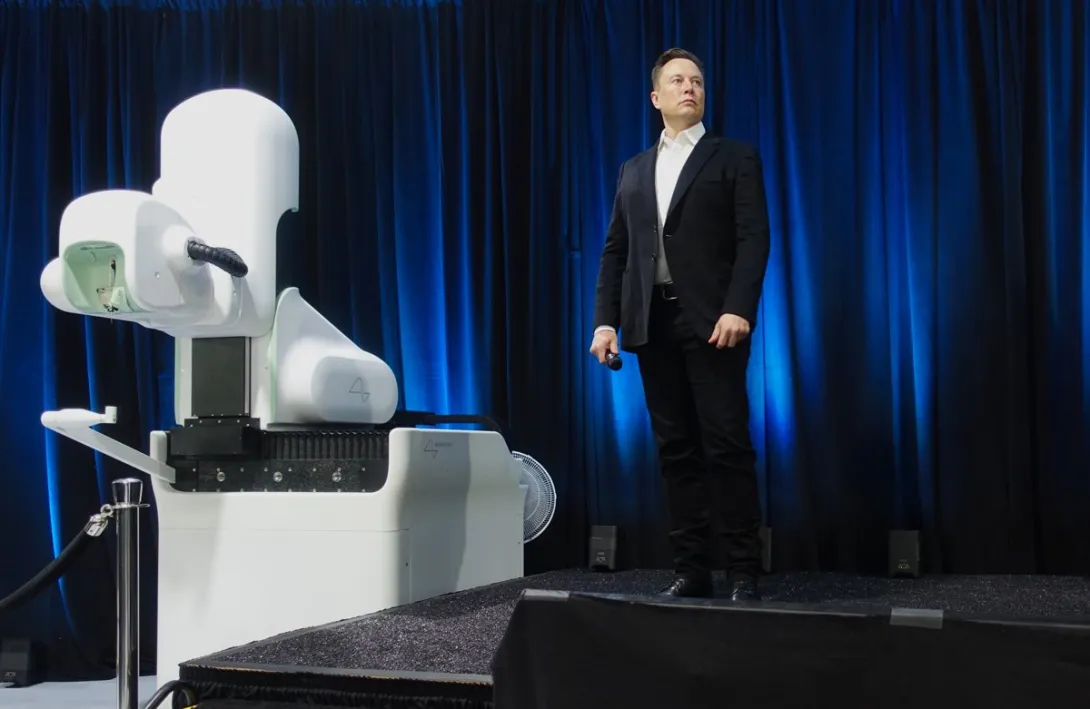
Neuralink's system centers on the N1 implant, a small device placed within the skull in the region of the brain responsible for planning movements. Its electrode threads extend into the brain, and the implant is designed to decode neural activity associated with intended movements. The N1 is placed using the company's R1 surgical robot, which inserts the flexible electrodes. Software then translates the recorded signals into commands for computers and other digital devices, without the need for keyboards or other physical controls.
The pivotal trial builds on earlier work. Neuralink says more than 30 participants have received its implant through ongoing early feasibility studies in the United States, Canada, and the United Kingdom. The company says those participants have used the technology to communicate with family members, pursue higher education, and play video games. Last year, the company highlighted its first participant with ALS, Bradford Smith, who was able to communicate using brain signals alone.
Neuralink is also running several related studies. Its PRIME study evaluates the safety of the N1 implant and the R1 robot and the ability of people with paralysis to operate external devices. The CONVOY study, launched in 2024, tests whether PRIME participants can use their implants to operate physical assistive devices, including a robotic arm. A separate VOICE study at UT Southwestern Medical Center in Dallas is evaluating whether the implant can help people with severe speech impairment communicate through text or computer-generated speech.
The distinction in this week's announcement matters. FDA approval to launch LINK allows Neuralink to recruit participants and conduct the study under an approved clinical protocol, but it does not authorize the company to commercially market the device. Neuralink did not disclose its target enrollment, the anticipated duration of the study, or the participating clinical sites in its announcement. If the technology proves safe and effective in the pivotal trial, that evidence could support more advanced trials and, eventually, a path toward bringing LINK to market.
For people living with severe paralysis from ALS, even incremental gains in communication and device control can make a substantial difference in daily independence. The LINK study is designed to measure exactly that kind of outcome, alongside safety, as the technology moves from early feasibility work into a larger, more rigorous phase of testing.
Photo: Elon Musk beside a Neuralink surgical robot at a presentation in August 2020. Photo by Steve Jurvetson, CC BY 2.0, via Wikimedia Commons.