One of Microsoft's most distinctive artificial intelligence research groups has come to an end, according to the researcher who helped create it. John Langford, a partner research manager at Microsoft Research, announced in a November 6 post on his Machine Learning (Theory) blog, titled "The End of AI Frontiers," that he has left Microsoft — and that the AI Frontiers group itself is finished. "So AI Frontiers is over," he wrote, adding that there will be no internships with the group's researchers in the coming year.
AI Frontiers was created inside Microsoft Research in 2023, after the release of ChatGPT convinced Langford and several colleagues that research needed to be more organized than was typical at the lab. A lone researcher with a clever idea, he argued, would likely arrive too late and with baselines too weak to prove the idea was worth pursuing. The group they built instead ran coherent, shared research efforts, and it did so with a small team of about 50 people.
Much of that work focused on making AI agents function in practice. The group's best-known public projects were AutoGen, an orchestration framework for coordinating multiple agents, and Fara, a computer use agent that operates a desktop interface on a user's behalf. Its New York researchers also pursued fundamental capabilities, including the Next Latent objective, the Dion3 optimizer, and the Full Bandwidth Transformer, which uses recursion to make models substantially more powerful.
The turning point came in early September, when the group was reorganized out of Microsoft Research and into Microsoft AI, the company's model-building organization. Langford wrote that the philosophy of Microsoft AI's leadership, which came from Inflection AI, proved incompatible with his group. "The core philosophy there is scaling, and aggressively not research," he wrote. In a scaling-only environment, he said, the primary effort shifts to obtaining, making and refining data — a long way from the work AI Frontiers had been doing. He also wrote that there was plenty of evidence the new organization did not really want the group.
Langford's central argument is that the industry is undervaluing research. Returns to scale are more predictable than returns to research, he conceded, but research returns are real. He pointed to experiments at ByteDance suggesting that a variant of the Full Bandwidth Transformer might match a model of twice the size, which would imply significant savings in training and inference costs at a time when industry investment is approaching a trillion dollars.
Langford wrote that he placed his team members as best he could before leaving, and that every other founding member of the AI Frontiers leadership team seems to have reached a similar conclusion. He considered returning to Microsoft Research but decided against it, saying he is not comfortable at a company where his research has no path to real use, and that the basic deal at the lab — do good work and good things happen — had broken down after his group was, in his words, non-consensually reorganized away.
Microsoft has not published a formal statement about the group's end, so the closure rests on Langford's own account. The public record, however, points the same way: Microsoft's AutoGen repository now states that the project is archived and that Microsoft is not providing bug fixes, security fixes, new features or support for it. For developers who built on AutoGen, the episode is a pointed reminder that the research-versus-scaling argument inside big technology companies is far from settled.
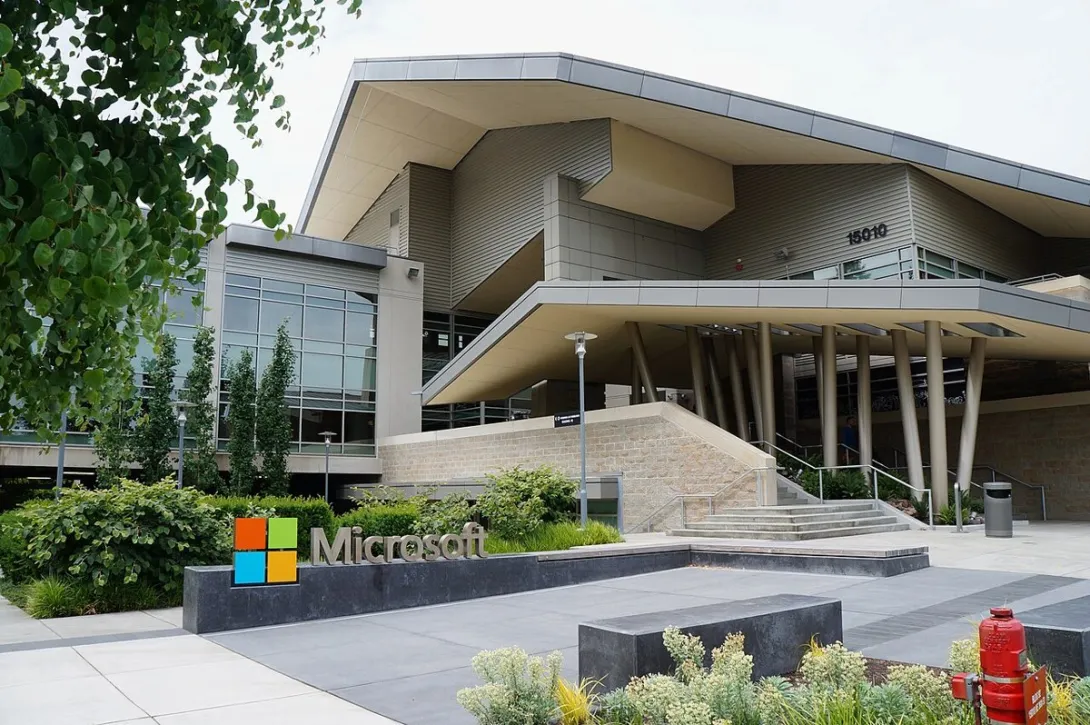
Photo: Building 92 on the Microsoft campus in Redmond, Washington, by Jiaqian AirplaneFan, via Wikimedia Commons (CC BY).