Skip to header Skip to main navigation Skip to main content Skip to footer
Scott Lawson
Your next upgrade lives here

Semiconductors

Marvell to Buy Lumentum in a 115 Billion Dollar Deal Betting AI Runs on Light
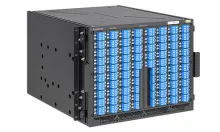
A Lumentum optical circuit switch with rows of blue optical ports, photographed against a white background.

Marvell Technology announced on Monday that it will buy optical components maker Lumentum in an all-stock deal with an enterprise value of 115 billion dollars, including debt. It is one of the biggest technology deals of 2026, and among the boldest bets yet that the artificial intelligence spending boom will last for years — not on faster chips alone, but on the light-based connections that move data between them.
  • Read more about Marvell to Buy Lumentum in a 115 Billion Dollar Deal Betting AI Runs on Light

SK Hynix Posts Its First 100 Trillion Won Quarter as AI Memory Demand Outruns Supply

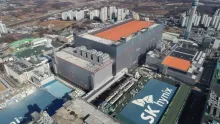
Aerial photograph of the SK hynix M16 campus in Icheon, South Korea.

SK hynix has posted the strongest quarter in its history, becoming the latest memory maker to show just how much of the artificial intelligence boom runs through a handful of chip factories. The South Korean company reported third-quarter revenue of 104.6155 trillion won, crossing 100 trillion won in a single quarter for the first time, with operating profit of 83.3338 trillion won and an operating margin of about 80 percent. Net profit came to 39.7756 trillion won.

  • Read more about SK Hynix Posts Its First 100 Trillion Won Quarter as AI Memory Demand Outruns Supply

OpenAI Plans to Buy Google's AI Chips, Deepening a Rivalry Turned Partnership

OpenAI plans to buy Google's artificial intelligence chips, according to a report by The Information on Tuesday, cited by Reuters. The report, which relies on a person familiar with the matter, says the ChatGPT maker intends to purchase Google's Tensor Processing Units, or TPUs, as technology companies keep ramping up spending on data centers and semiconductors to meet surging demand for AI computing.

  • Read more about OpenAI Plans to Buy Google's AI Chips, Deepening a Rivalry Turned Partnership

Intel Agrees to Buy Quantum Software Startup Classiq in a Deal Reported at 2.3 Billion Dollars

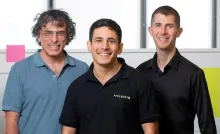
The three co-founders of quantum software company Classiq posing together in an office, one wearing a Classiq polo shirt.

Intel said on Monday that it has entered into a definitive agreement to acquire Classiq, an Israeli startup that makes software for building quantum computing programs, in a move that would turn the chipmaker's long-running quantum research effort into a full-stack business spanning hardware and code. Intel said combining Classiq's synthesis platform with its own spin-qubit manufacturing and existing software would create a user-friendly platform aimed at moving quantum computing toward the mainstream.

  • Read more about Intel Agrees to Buy Quantum Software Startup Classiq in a Deal Reported at 2.3 Billion Dollars

Jim Keller's Tenstorrent Raises 1.5 Billion Dollars to Scale Its Open AI Chips

A technician's hands slide a Tenstorrent Galaxy AI server, with its geometric vented front panel, into a data center rack.

Tenstorrent, the AI chip company led by veteran processor designer Jim Keller, said on Monday that it has closed a 1.5 billion dollar Series E funding round at a 6.2 billion dollar post-money valuation. The figure more than doubles the valuation the company reached in December 2024, and it ranks among the largest single raises by an independent AI chip startup this year.

  • Read more about Jim Keller's Tenstorrent Raises 1.5 Billion Dollars to Scale Its Open AI Chips

Samsung Turns to Rival TSMC for a Key Part of Nvidia's Next-Generation AI Memory

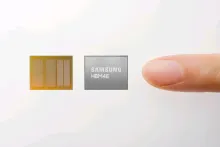
Samsung HBM4E memory chips photographed next to a fingertip for scale.

Samsung Electronics will use TSMC's 3-nanometre manufacturing process to produce the base die for Nvidia's next-generation custom high-bandwidth memory, the Seoul Economic Daily reported on Sunday, in a story relayed by Reuters. The arrangement would mark the first time Samsung has worked with the Taiwanese contract chipmaker at the HBM manufacturing stage, and it signals how far Nvidia's push for a standardized memory design now reaches into its suppliers' factories.

  • Read more about Samsung Turns to Rival TSMC for a Key Part of Nvidia's Next-Generation AI Memory

ASML Posts Record Sales and Warns AI Demand Will Outrun Its 2027-2028 Supply

Cartoon illustration of a smiling lithography machine printing glowing microchips on a conveyor belt while a long queue of small robots waits for more chips.

The company that makes the machines behind the world's most advanced chips just posted its strongest quarter on record, and its message to customers was blunt: even a faster buildout may not be enough to keep up with artificial intelligence demand.

  • Read more about ASML Posts Record Sales and Warns AI Demand Will Outrun Its 2027-2028 Supply

AI Infrastructure Stocks Tumble as Rate-Hike Bets Raise the Cost of the Buildout

Cartoon illustration of data center buildings weighed down by borrowing chains as a rising tide lifts borrowing costs and stock arrows point down.

The bill for the artificial intelligence buildout got more expensive on Wednesday, and investors noticed. Shares of debt-heavy AI infrastructure companies tumbled as the prospect of higher U.S. interest rates revived a basic question about the boom: how much return will all of this borrowed money actually produce?

  • Read more about AI Infrastructure Stocks Tumble as Rate-Hike Bets Raise the Cost of the Buildout

Nvidia's China AI Chip Share Slides to 34% as Huawei Closes In

Cartoon illustration of two rival AI computer chips racing on a circuit-board track inside a data center, with the trailing chip closing the gap.

For years, Nvidia's grip on China's data center AI chip market looked unshakeable. New figures from research firm IDC, reported by Reuters on October 13, show how quickly that position is eroding. Nvidia's share of the market fell to 34% in the first half of 2026, while Huawei climbed to 28% — close enough that the race for China's AI hardware business now looks genuinely competitive.

  • Read more about Nvidia's China AI Chip Share Slides to 34% as Huawei Closes In

Microsoft Unveils Maia 300 and Plans a Million-Chip Bet on Its Own Silicon

Cartoon illustration of a cheerful computer chip assembled from smaller chip pieces standing in front of glowing data center server racks.

Microsoft has made its biggest move yet to run its artificial intelligence services on hardware of its own design. On Monday the company unveiled Maia 300, the third generation of its custom AI chip, and said it plans to deploy potentially more than a million of them starting next year in multi-gigawatt installations. Chief Executive Satya Nadella described the rollout as the company's biggest bet yet on its own silicon, and Azure executive Scott Guthrie said Maia is intended to become the primary system for running AI inference across Microsoft's products and services.

  • Read more about Microsoft Unveils Maia 300 and Plans a Million-Chip Bet on Its Own Silicon

Pagination

  • Previous page ‹‹
  • Page 2
  • Next page ››
Subscribe to Semiconductors

Copyright © 2026 Rocky Mountain Madman LLC - All rights reserved

Developed and Designed by Rocky Mountain Madman LLC