Intel said on Monday that it has entered into a definitive agreement to acquire Classiq, an Israeli startup that makes software for building quantum computing programs, in a move that would turn the chipmaker's long-running quantum research effort into a full-stack business spanning hardware and code. Intel said combining Classiq's synthesis platform with its own spin-qubit manufacturing and existing software would create a user-friendly platform aimed at moving quantum computing toward the mainstream.
Intel did not disclose the price. The Israeli technology outlet CTech reported the deal at 2.3 billion dollars in cash and Intel shares, while Globes put it at 2.2 billion dollars. At the CTech figure, Classiq would become the most expensive quantum company acquisition to date by a wide margin, more than double the previous record set last year when IonQ acquired Oxford Ionics for 1 billion dollars. It is a striking price for a six-year-old company that has raised about 200 million dollars, and whose 110 million dollar raise in 2025 valued it at an estimated 600 million to 700 million dollars.
Classiq's appeal is the layer it occupies. Quantum computers are notoriously difficult to program, because applications have traditionally been built as custom, hand-crafted circuits by specialists. Classiq's platform automates that work: it combines a high-level quantum modeling language, design automation and AI agents to generate optimized, hardware-ready quantum software, without requiring deep expertise in circuit design. Crucially, the platform is agnostic about the underlying hardware, working across different qubit technologies rather than tying customers to one machine. Intel drew an explicit parallel with classical computing, noting that electronic design automation software transformed chip design more than forty years ago by abstracting hardware complexity in much the same way.
That software layer is the missing piece on Intel's side. The company has invested in quantum computing since 2015 and builds its effort around silicon spin qubits, saying it is the only company able to produce qubit chips and complex cryogenic control electronics at scale using equipment and processes common to conventional semiconductor manufacturing. Adding Classiq would let Intel offer Quantum Processing Units alongside its existing CPUs, GPUs and custom ASICs, and give customers a single route from algorithm to hardware.
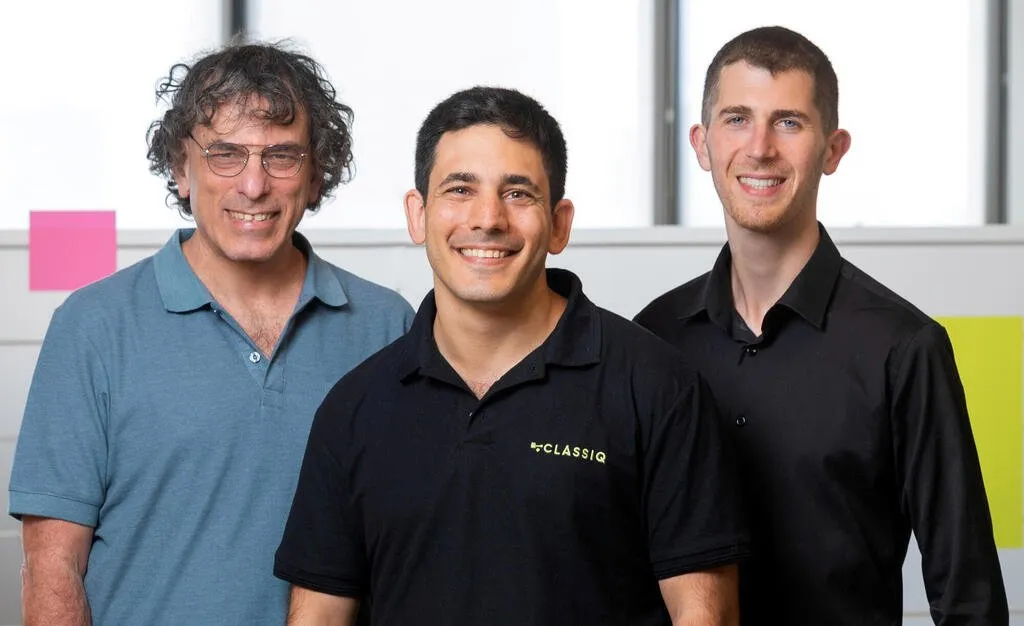
Classiq was founded in 2020 by Nir Minerbi, its chief executive, Amir Naveh, its chief product officer, and his father, Professor Yehuda Naveh, its chief technology officer. The company employs about 150 people, and CTech reports its customers span banking, automotive and pharmaceuticals, including BMW, Rolls-Royce, HSBC, Deloitte, Toshiba and Citi. Intel chief executive Lip-Bu Tan said joining forces transforms Intel's Quantum Computing Group into a full-stack quantum computing business. Minerbi said the two companies together can help unlock the benefits of quantum computing and accelerate its adoption sooner.
One detail adds a personal dimension. Tan invested in Classiq personally before becoming Intel's chief executive, including in its February 2022 funding round, and CTech reported, citing sources close to Classiq, that he recused himself from the acquisition discussions. Intel has not publicly addressed how his stake will be treated.
The transaction is expected to close in the first half of 2027, subject to regulatory approvals, and the two companies will operate separately until then. Intel says it intends to keep supporting Classiq's existing multi-platform integrations and maintain its hardware-agnostic approach after closing, rather than locking the platform to Intel machines. Quantum computing has yet to reach broad commercial use, which makes the size of the bet the story in itself: Intel is paying a record price now for the software layer it believes will decide who wins when the technology does arrive.