Skip to header Skip to main navigation Skip to main content Skip to footer
Scott Lawson
Your next upgrade lives here

Machine Learning

An AI System Proves an 18-Year-Old Quantum Conjecture, and a Computer Checks Every Step
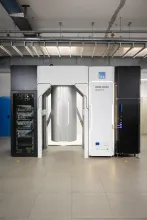
The Euro-Q-Exa quantum computer at the Leibniz Supercomputing Centre in Garching, Germany.

A research system built by Physical Superintelligence, a laboratory known as PSI, has produced a proof of the Aaronson-Ambainis conjecture, a central open problem in quantum computing that had stood since 2008. PSI announced the result on Friday, saying that its internally developed system, running instances of a non-public Anthropic model on PSI's own infrastructure, had a complete proof during the third day of the run. The proof was then accepted by Lean, a proof assistant that checks every logical step by computer.


  • Read more about An AI System Proves an 18-Year-Old Quantum Conjecture, and a Computer Checks Every Step

METR Finds Anthropic Is Improving Its AI Models About Twice as Fast, Mostly by Using AI Itself

Anthropic is now improving its AI models at about twice the pace it managed before late 2025, and most of that acceleration appears to come from the company using AI to help build AI. That is the central finding of an independent assessment published on November 5 by METR, a nonprofit that evaluates frontier AI systems, after its staff spent eleven weeks examining Anthropic's internal research process.

  • Read more about METR Finds Anthropic Is Improving Its AI Models About Twice as Fast, Mostly by Using AI Itself

GitHub Says Agents Now Start More Than 40 Percent of Pull Requests

Photograph of the GitHub headquarters entrance in San Francisco with the Octocat sign.

For a growing share of the world's software, the first draft no longer comes from a person typing at a keyboard. GitHub's annual Octoverse report, published on October 28, says that by September 2026 developers started more than 40 percent of pull requests with a coding agent's first draft, up from 17 percent in March. That is 110 million agent-started pull requests in September alone, about six times March's volume.

  • Read more about GitHub Says Agents Now Start More Than 40 Percent of Pull Requests

Claude Designs Quantum Circuits That Beat the Best Published Versions, Cutting Gates Up to 17-Fold

The gold chandelier-like interior of a quantum computer cryostat, showing its layered wiring and cooling stages.

Anthropic says its Claude Mythos 5 model has designed quantum circuits that improve on the best previously published versions, in some cases by an order of magnitude or more. In a research post published on October 16, 2026, the company reported that Claude, working in a closed loop with an automated evaluator and largely on its own, took on eight computational primitives — the basic routines from which larger quantum algorithms are built — spanning chemistry, optimization, quantum simulation, number theory and numerical computing.

  • Read more about Claude Designs Quantum Circuits That Beat the Best Published Versions, Cutting Gates Up to 17-Fold

Google Is Testing "Carbon," a Gemini 4 Model That Feels Like Anthropic's Best at Coding

Cartoon illustration of a glowing diamond-like gemstone floating above a laptop with code flowing around it.

Google's race to catch up in AI-assisted coding may have a new contender — and it is not the model everyone is waiting for. Business Insider reported this week that Google employees are internally testing a Gemini 4 variant codenamed Carbon, and early feedback suggests it could be the strongest coding model the company has built.

  • Read more about Google Is Testing "Carbon," a Gemini 4 Model That Feels Like Anthropic's Best at Coding

CoreWeave's Forge Wants to Own the AI Inference Stack

Cartoon illustration of a computer processor chip being forged on an anvil with sparks flying.

CoreWeave built its reputation selling raw AI compute. Now it wants to sell the software layer on top of it. At its Fully Connected conference, the company unveiled CoreWeave Forge, a development platform that folds model serving, observability, post-training, and evaluation into a single environment — and it comes with a striking performance claim: a preview feature called RL Rollouts that improved model reload latency by 15x in testing.

  • Read more about CoreWeave's Forge Wants to Own the AI Inference Stack

Mistral Large 4: France's Trillion-Parameter "le Chonk" Enters Public Preview

A chunky friendly cartoon rooster-robot made of glowing blue neural-network nodes, representing Mistral's trillion-parameter Large 4 model.

French AI lab Mistral has launched Mistral Large 4, a 1.05-trillion-parameter natively multimodal model the company has nicknamed "le Chonk," now available in public preview via API. Open weights are promised by the end of October, after a red-teaming phase.

  • Read more about Mistral Large 4: France's Trillion-Parameter "le Chonk" Enters Public Preview

Anthropic's Haiku 5.5: A 90% Price Cut Sharpens the Small-Model Price War

A cartoon illustration of a small speedy robot sprinting forward with motion lines and a trail of price tags, illustrating Anthropic's Haiku 5.5 price cuts.

Anthropic released Claude Haiku 5.5 on Wednesday, the third launch in the Claude 5.5 family after Opus 5.5 and Sonnet 5.5 earlier this fall. Where the bigger siblings brought capability, Haiku 5.5 brings aggression: Anthropic calls it the cheapest, fastest, and most capable small model it has ever shipped, and the pricing backs up the claim.

  • Read more about Anthropic's Haiku 5.5: A 90% Price Cut Sharpens the Small-Model Price War
Subscribe to Machine Learning

Copyright © 2026 Rocky Mountain Madman LLC - All rights reserved

Developed and Designed by Rocky Mountain Madman LLC