Thinking Machines Lab is reportedly close to raising 5 billion dollars in a funding round led by Accel at a 40 billion dollar pre-money valuation, according to Business Insider, which cited multiple people familiar with the negotiations on November 6. The financing could close as soon as this week, which would value the company at about 45 billion dollars after the new money is counted. Thinking Machines declined to comment and Accel did not respond, so the round is reported rather than confirmed until either side announces it.
The reported price underlines how quickly the lab founded by former OpenAI chief technology officer Mira Murati has grown. Thinking Machines raised 2 billion dollars in July 2025 at a 12 billion dollar valuation, a seed round that largely reflected confidence in Murati and a team recruited heavily from OpenAI. A 45 billion dollar valuation would be nearly four times that price in well under eighteen months. The company has disclosed little about its revenue, which makes the model release that arrived in the same week an important part of the story investors are being asked to believe.
That release is Inkling 2 Small, introduced on November 5 as the first model in the company's second generation. Despite the name, it is small only by frontier standards: a mixture-of-experts model with 594 billion total parameters, of which about 17 billion are active for any given prompt. A 292-million-parameter vision encoder gives it image inputs as well as text, and it can vary the reasoning effort it spends on a task, allowing developers to trade quality against cost.
Thinking Machines says the training run was built for long, autonomous work. Pretraining processed 8.4 trillion tokens in 68 hours on Nvidia GB300 NVL72 systems, followed by another 3.8 trillion tokens of newer data. A nine-day reinforcement learning run on 2,048 graphics processors then completed more than 17 million rollouts across coding, document creation, visual analysis and tool use, including exercises in training other models.
The reported gains are substantial. Artificial Analysis scored the model at 31 on its Intelligence Index, up 18 points over the previous generation, with the largest advances in agentic tasks. Its AutomationBench-AA score rose from 5 percent to 46 percent, and its FrontierCode 2.0 score from 5 percent to 25 percent. In a demonstration the company highlighted, the model spent 4.5 hours and 426 dollars on the Tinker platform autonomously fine-tuning the open Qwen3.5-4B model and more than doubled its forecasting score.
Inkling 2 Small is available now through Tinker, the company's training platform, and its online Playground, at 0.30 dollars per million input tokens and 1.00 dollar per million output tokens. The weights are closed at launch; Thinking Machines says it intends to release them under an Apache 2.0 license next week, after external safety testing and red-teaming. Independent testing also carries a caution: Artificial Analysis found the model uses roughly four times as many output tokens per benchmark task as its predecessor, raising its average cost per task, so stronger results do not yet mean cheaper ones.
Two tests now arrive together: whether the reported funding closes at the reported price in a market that has just punished artificial intelligence valuations, and whether the promised open weights appear next week and hold up under outside use. If both happen, Thinking Machines will have moved in a single week from a well-funded promise to a lab with a credible open model, a paying platform and one of the largest private valuations in the industry.
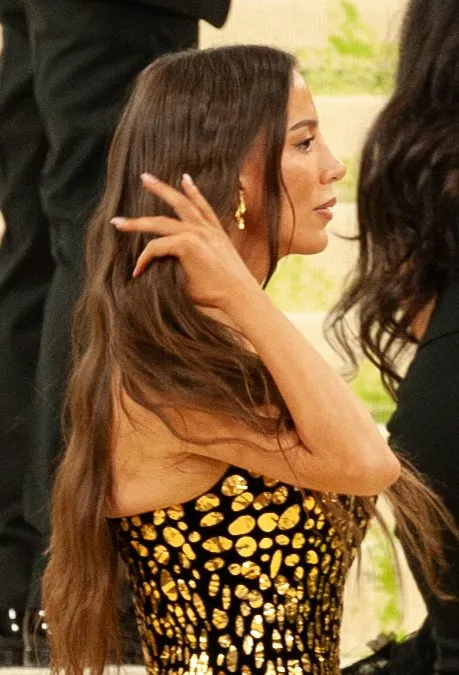
Photo: Mira Murati, founder of Thinking Machines Lab, at the 2026 Met Gala. Photograph by SWinxy, via Wikimedia Commons, licensed under CC BY 4.0.