China unveiled a draft plan on Friday, October 16, to restrict exports of 40 cutting-edge technologies spanning artificial intelligence, biomedicine and solar manufacturing. The proposal, titled Announcement No. 48, came jointly from the Ministry of Commerce and the Ministry of Science and Technology, and it would place some of China's most valuable technical know-how under a formal export-control catalogue.
Under the draft, 14 technologies would be prohibited from export altogether, while a further 26 would be restricted and require licensing. Reporting on the breakdown puts 23 of the listed items in AI, 12 in photovoltaics and five in biomedicine. The proposed bans include perovskite and tandem solar-cell module manufacturing, AI-driven technology that could be used to generate and mutate malicious code, and some platforms related to cell and gene therapy.
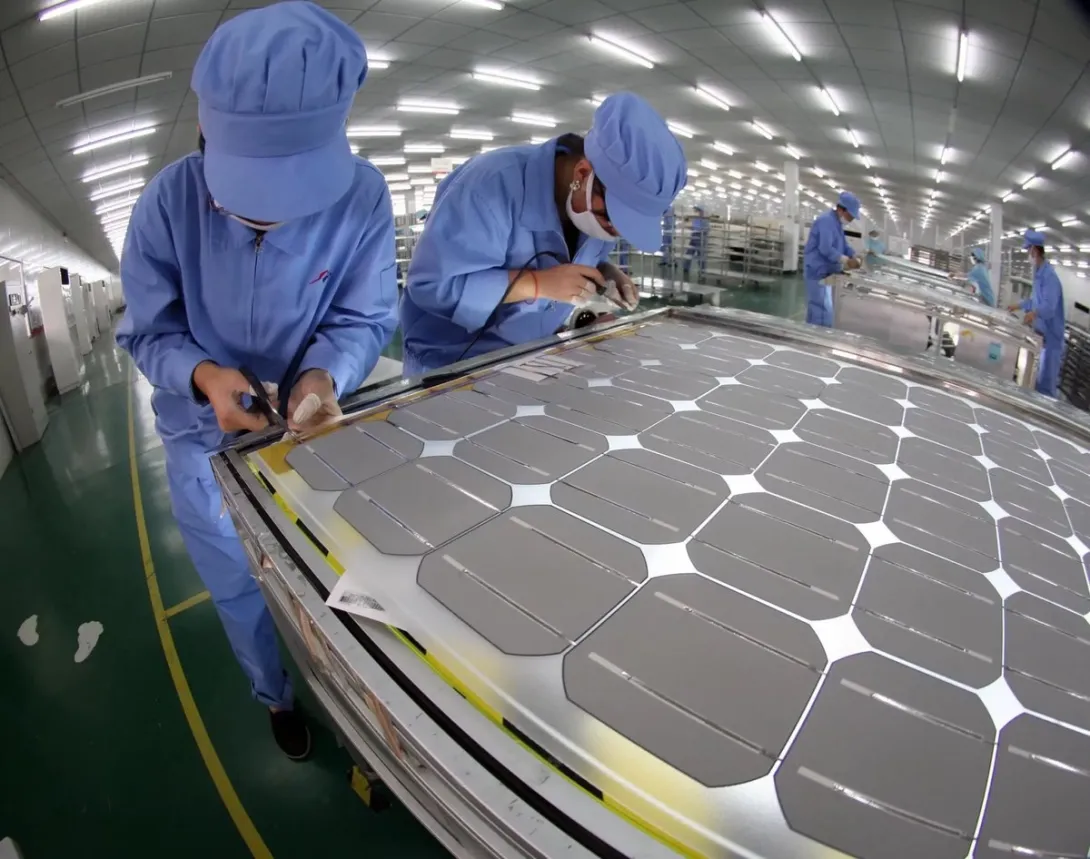
The solar provisions are the most detailed. Beijing says it is adding 12 photovoltaic technologies covering polysilicon production, wafer manufacturing and solar-cell manufacturing. Among the restricted items are polysilicon engineering technologies for production lines with annual output of at least 30,000 tonnes. Officials stressed that only a limited set would be regulated, that most solar exports are not targeted, and that other photovoltaic technologies would remain freely exportable.
Explaining the move, the Commerce Ministry said AI, biomedicine and photovoltaic technologies have seen expanding use in sensitive fields, and pointed to photovoltaic uses in aerospace, defence and unmanned systems. The ministry said major economies have adopted controls of their own in these areas, and framed China's plan as a lawful step to prevent loss of control over technologies and their inappropriate spread, while still safeguarding normal international cooperation.
This is a draft, not a final rule. The plan is open for public comment until November 15, 2026, according to reporting on the consultation, and no implementation date for a final catalogue has been announced. Early summaries of the proposal also note important carve-outs: hosted access to AI through APIs, websites, apps and software as a service would sit outside the proposed scope, and AI technology already in the public domain would be excluded. The licensing criteria, processing times and penalties that would decide how the rules bite in practice have not yet been spelled out.
The stakes are highest for countries trying to build solar industries of their own and reduce dependence on China. Analysts in India warned that licensing delays could slow domestic manufacturers just as localisation plans are set to begin, potentially affecting the first group of producers expected to anchor new capacity. More broadly, the proposal shows export controls spreading in a new direction: not only governments restricting what flows into China, but Beijing restricting the manufacturing knowledge that flows out of it. What companies and governments do next will depend on the final list, due after comments close in mid-November.