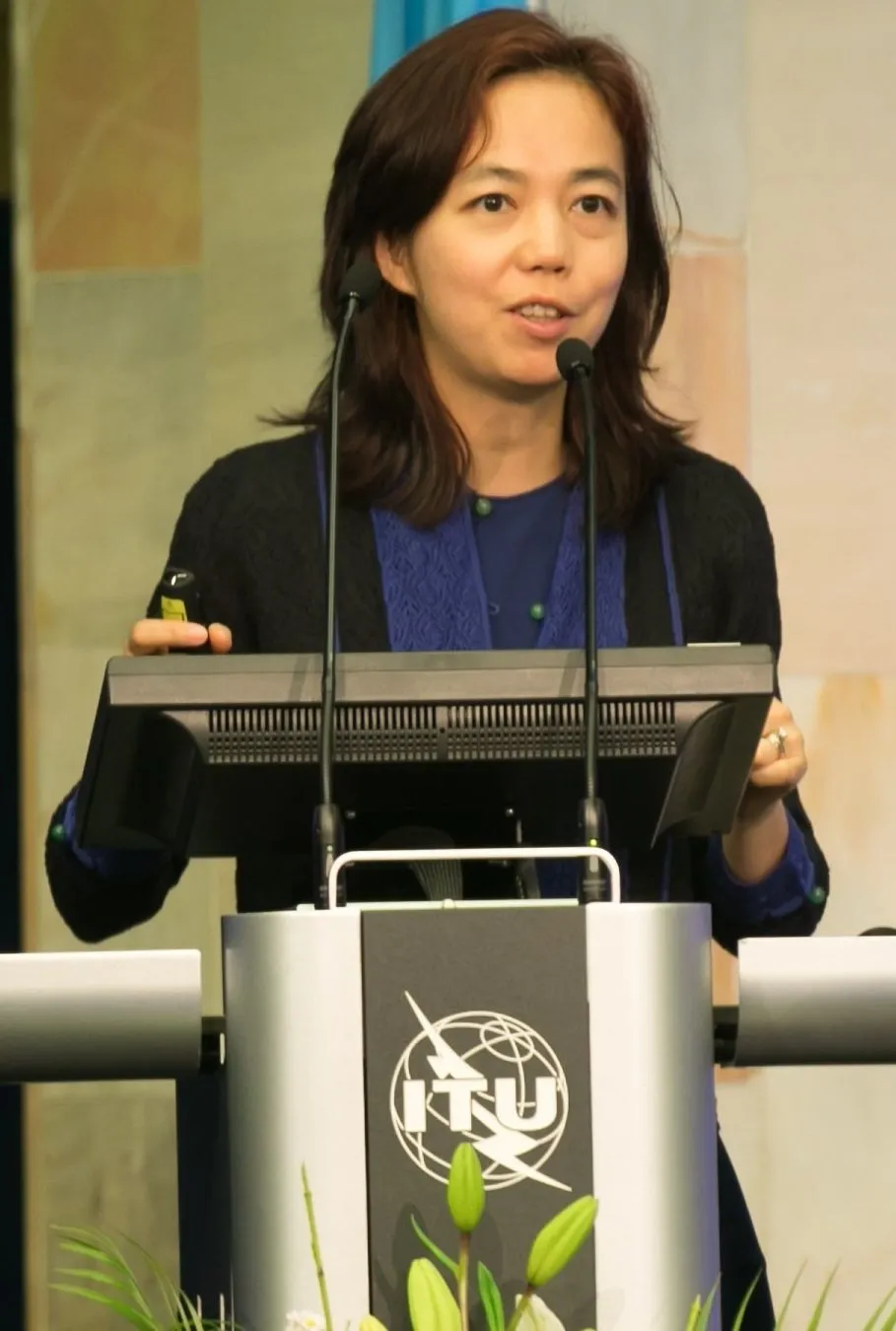
AMD announced on Monday, November 16, that it has completed its acquisition of World Labs, the spatial intelligence company co-founded by computer scientist Fei-Fei Li. The legal closing took place on November 13, according to an amended regulatory filing published the same day as the announcement. The all-stock transaction was originally valued at approximately 8.2 billion dollars, and Li joins AMD as executive vice president and chief scientist, reporting directly to chair and chief executive Lisa Su.
The filing supplies the final mechanics of the deal. AMD issued 14,978,322 shares of its common stock to former World Labs stockholders, with the share count calculated from the company's daily volume-weighted average share price over ten consecutive trading days ending on the second trading day before closing. The merger agreement was signed on September 26 and announced on September 28, with closing expected by the end of 2026, subject to regulatory approvals and other customary conditions. The November completion lands comfortably inside that timetable.
World Labs, founded in 2024 and based in San Francisco, builds what it calls spatial intelligence: models that generate, reconstruct and simulate interactive three-dimensional environments from text, images and video. Its technology also supports robotic learning and simulation, in which a physical task can be rebuilt in a virtual environment, varied and tested before a robot attempts it in the real world. That is a different kind of AI workload from the chatbots and image generators that dominate headlines, and it is one that places unusual demands on computing hardware.
The company's newest release shows the work in concrete form. Atlas, released on November 12, is described as a next-generation world model that creates and reconstructs 3D environments, with tools and developer APIs alongside it. Its Viewfinder tool reconstructs a scene from photos or generated images and supports new viewpoints and camera paths, while Chisel lets users lay out and adjust a scene, and other tools turn scenes into meshes with real geometry and change how they are lit. World Labs points film and visual-effects work, architecture and design, and robotics research as the fields where those workflows apply.
For AMD, the stated logic is co-design. Su said that delivering the infrastructure for the next era of AI requires companies to optimize compute platforms and models together, and AMD says the World Labs team will continue its foundational model research while working with AMD engineers on future hardware, software and systems. The two companies were not strangers: their technical partnership began in 2025, initially focused on training and inference optimization on AMD graphics processors. Li, Justin Johnson and Ben Mildenhall are expected to continue leading the team inside AMD.
The acquisition also fits AMD's open AI ecosystem strategy, in which research into emerging workloads helps shape infrastructure offered to customers and developers. Whether that route produces a measurable advantage will depend on what the combined team publishes and ships, and on how directly its findings about world models, robotics and simulation reach AMD's chip and software roadmaps. What is already clear is the scale of the bet: a chipmaker has paid roughly 8.2 billion dollars in its own stock to bring a model research lab, and one of the field's best-known scientists, in-house.
Photo: Fei-Fei Li speaking at the AI for Good Global Summit in 2017, via Wikimedia Commons.