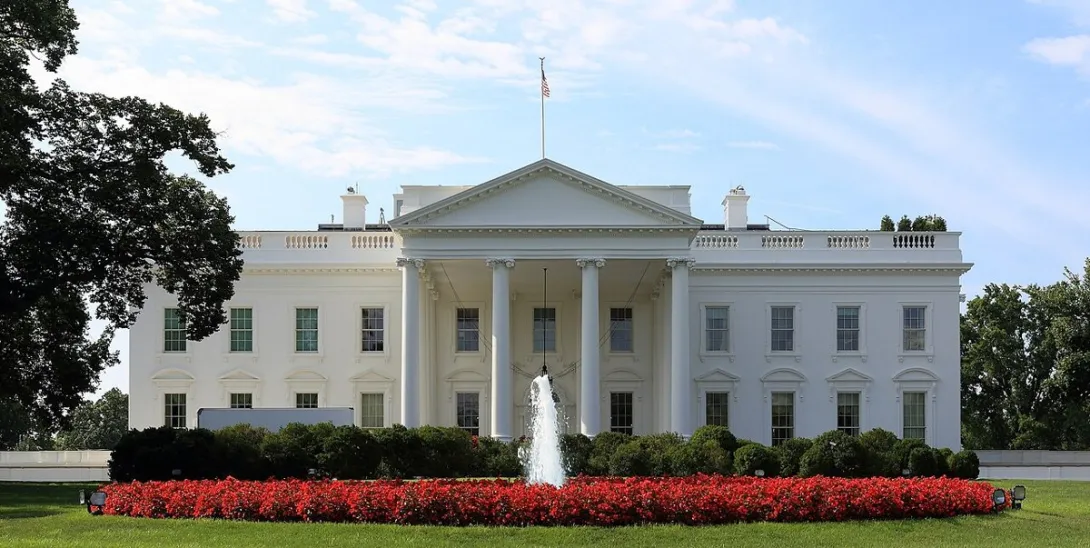
The White House's new artificial intelligence task force has settled on its first assignments. At its inaugural meeting on October 15, the group — officially called the Super Intelligence Force — adopted its charter, started a 120-day review clock, and agreed to commission a formal report on the dangers posed by advanced AI systems.
That report will come from the President's Council of Advisors on Science and Technology, known as PCAST. According to accounts of the meeting reported by Bloomberg and Semafor, the council will assess three broad categories of risk: cybersecurity and critical infrastructure, biosecurity and dual-use applications, and model control and accountability. In plain terms, the review asks whether AI could be used to attack essential systems, whether it could help create biological harm, and whether the companies building powerful models can reliably keep them under control.
The task force is led by Director of National Intelligence Jay Clayton, whom President Donald Trump appointed as AI czar in early October. Andrew Ferguson, Emil Michael and Scott Kupor serve as vice chairs, and the group reports directly to the president and White House Chief of Staff Susie Wiles. Clayton and Sean Cairncross will lead work on implementing the White House Accord on Super Intelligence, the voluntary agreement signed by AI executives last month, while Michael will develop protocols for how labs report incidents to the government.
Those reporting protocols are a central piece of the plan. The task force agreed to develop mechanisms for AI companies to give early warnings and notifications about breaches, hacks and jailbreaks — the techniques used to bypass a model's safeguards. It also agreed to establish a law enforcement and consumer protection coordination committee that will include the Department of Justice, the Federal Trade Commission and other agencies.
Notably, the White House account said the task force did not consider new laws or rules at the meeting. Instead, it plans to engage frontier model developers, other AI companies, consumer protection groups, civil liberties advocates, industry stakeholders and law enforcement agencies as it shapes its work. That keeps the administration's approach, for now, centered on voluntary commitments and coordination rather than binding regulation — though how compliance would be enforced remains unclear.
Speaking to CNBC on Friday, October 16, Clayton called the inaugural meeting "very good" and said it built on the accord Trump and several AI leaders signed last month. He also framed the work as a competition. "The Chinese, the Russians, the Iranians, the North Koreans all have significant technical capability," Clayton said. "We need to stay ahead of them."
For AI companies, the practical takeaway is that incident reporting is moving from an informal expectation toward a defined government process, even if it stays voluntary. For everyone else, the PCAST report will be the document to watch: it will show which risks the administration takes most seriously, and whether its next steps stay with voluntary accords or move toward harder rules.