Nvidia has told its manufacturing partners to stop shipping AI servers to Malaysia, Singapore, Thailand and Indonesia, according to a Financial Times report published on November 26. Partners including Dell Technologies and Super Micro Computer have told buyers in the four countries that Nvidia will not allow their pending orders to ship, as the companies work out how to comply with new United States export controls.
It is not yet clear whether the halt is temporary. Nvidia, Dell and Supermicro did not respond to requests for comment, the Financial Times said, and Reuters could not immediately verify the report. Even so, the pause shows how quickly a rule change in Washington can freeze hardware deliveries on the other side of the world, at a moment when demand for AI servers is running at record levels.
The trigger is a rule from the Commerce Department's Bureau of Industry and Security, announced on November 16 and effective November 19. It requires a license to export, re-export or transfer qualifying advanced computing hardware to or within Malaysia, Singapore, Thailand, Indonesia and Brazil. The bureau identified those countries as presenting an elevated risk of unauthorized chip diversion. Brazil was named in the rule but was not among the countries in the reported shipment halt.
The rule is aimed at more than boxes crossing borders. For several years, Chinese AI developers have been able to rent computing power from data centers in Southeast Asia, gaining access to advanced Nvidia processors without importing the chips themselves. The new controls target that remote-access route as well, covering certain high-volume computing arrangements involving companies headquartered in China, Macau or other designated jurisdictions, including firms whose ultimate parents are based there. Existing data centers in covered arrangements have 90 days from November 19 to obtain a license if they want to keep providing that capacity.
The controls are not a blanket ban. Qualifying end users headquartered in the United States, and companies whose ultimate parents are headquartered there, are excluded from the destination-based licensing requirement, although reporting obligations and other export rules can still apply. Singapore's government said on November 16 that it was already engaging businesses and United States authorities about the changes.
The stakes for the region are large. Malaysia alone recorded 123.5 billion ringgit in approved data center and cloud computing investments across 86 projects between January and September 2026, according to the Malaysian Investment Development Authority. How many of those projects depend on the paused shipments is unknown, but financing was already feeling the strain: Bloomberg reported on November 18 that lenders had paused work on a proposed 480 million dollar loan to Singapore-based Aolani Cloud for GPU purchases at a Malaysian data center serving ByteDance.
For buyers with servers on order, the practical advice is unglamorous but urgent: get written confirmation of shipment status and delivery dates, clarify who is responsible for licenses and end-user documentation, and check whether reserved cloud capacity rests on hardware that is already installed or still waiting to ship. A purchase order, as one industry summary put it, is not a delivery guarantee.
What happens next depends on how quickly Nvidia and its partners can build a compliance process that satisfies Washington without stranding legitimate customers. Until then, one of the world's fastest-growing AI regions is learning that access to advanced computing now depends as much on licensing paperwork as on supply.
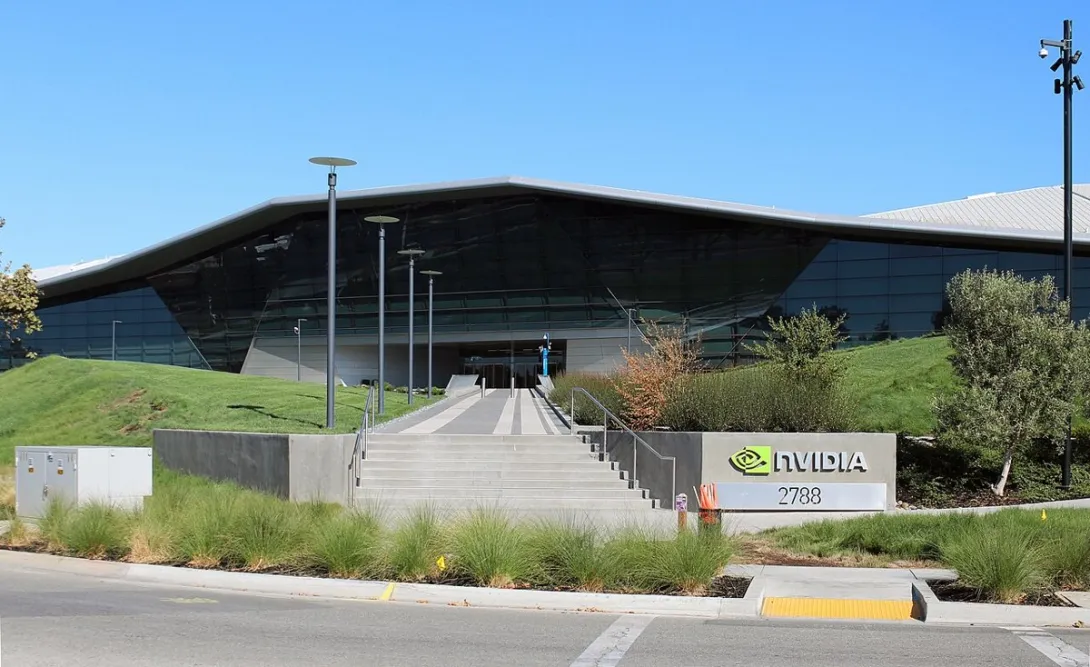
Photo: Nvidia headquarters in Santa Clara, California. Coolcaesar via Wikimedia Commons, CC BY-SA 4.0.