California Attorney General Rob Bonta said on Thursday that his office has served an investigative subpoena on Nvidia, opening a state probe into whether the chipmaker's advanced processors or confidential information reached China and whether the company misled investors and the public about that risk.
The subpoena follows reports about former chief executive Jensen Huang's relationship with Alice Huang, a businesswoman whom United States authorities suspect of working for Chinese intelligence. The two are not related. In his announcement, Bonta said the information obtained through the subpoena will help the California Department of Justice evaluate whether Nvidia's actions violated California law.
"The conduct of Nvidia and its former CEO raises bright red flags, including about the ways in which the company may have misled investors," Bonta said. "My office is investigating whether Nvidia or Jensen Huang's actions resulted in China obtaining advanced chips or confidential information — and if Nvidia misled investors and the public about this risk, in violation of the law." He added that "the underlying principle of our corporate securities law is clear: Companies cannot mislead their investors."
The state action lands little more than a week after Huang resigned as chief executive, ending a tenure of more than three decades at the company he co-founded. Nvidia's board has opened its own investigation, and the company has said it has no intention of reinstating Huang. A subpoena is a demand for information, not a finding of wrongdoing, and neither the state nor the company has announced any conclusion about whether chips or secrets actually reached China.
California is not acting alone. According to Reuters reporting, United States intelligence agencies are examining the extent of Alice Huang's possible ties to China's Ministry of State Security, and the Securities and Exchange Commission is also reportedly probing Nvidia following the resignation. Huang has agreed to appear for transcribed interviews before congressional committees in early December, and the House Foreign Affairs Committee said on Thursday that the Trump administration had approved shipments of nearly 900,000 advanced Nvidia and AMD chips to Chinese companies between December 2025 and May of this year, although it was unclear how many were ultimately shipped.
Nvidia has said those approvals were subject to strict conditions and limited volumes, and that it has stopped shipping its H200 chips to China. China has rejected allegations of an espionage operation targeting Huang. Democratic lawmakers have separately opened an inquiry into the administration's management of chip sales to China, asking the Commerce Department to preserve records related to the approvals.
The timing adds legal pressure to a company that reported record quarterly revenue of 115.8 billion dollars only two days earlier. For investors, the question is no longer just how fast Nvidia can sell artificial intelligence hardware, but what the company knew about its China exposure, when it knew it, and what it told the market along the way. The answers will emerge slowly, through documents and testimony, and California's subpoena is the newest formal step in that process.
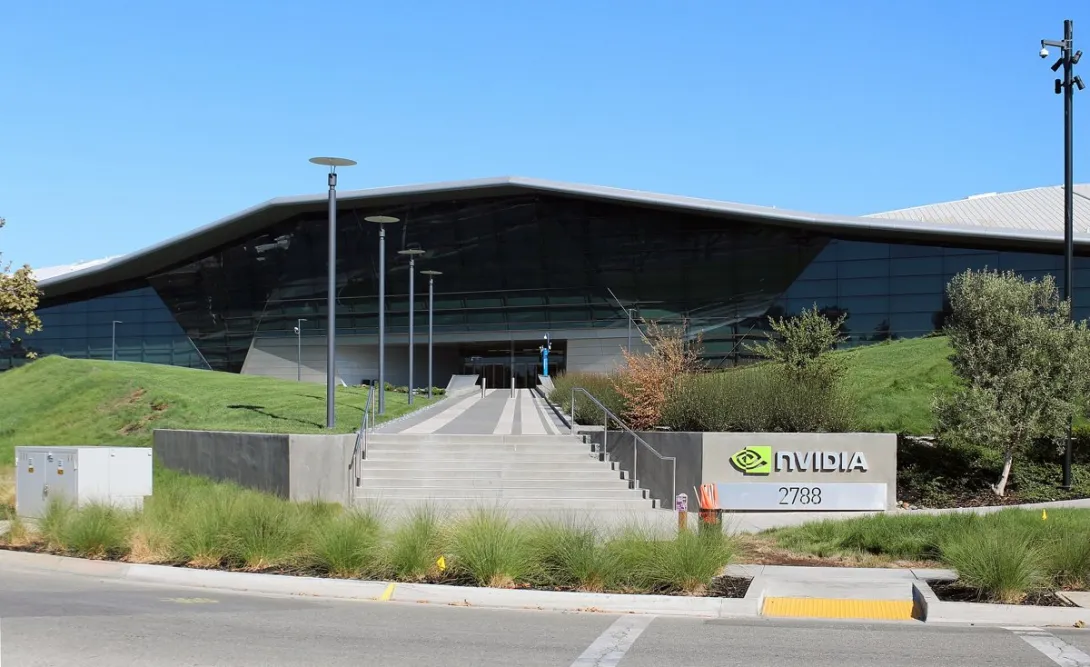
Photo: Nvidia headquarters in Santa Clara, California, photographed by Coolcaesar, via Wikimedia Commons, licensed under CC BY-SA 4.0.