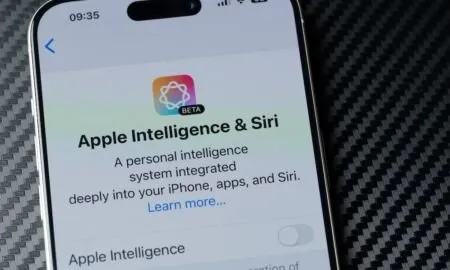
Apple Intelligence is finally on its way to iPhone users in mainland China, and it will arrive with a local engine under the hood. Apple has confirmed that testing begins on November 4 in the next iOS developer beta, with a public release planned for December as part of iOS 27.3. Instead of the ChatGPT integration offered elsewhere, the China version plugs into Qwen, the family of AI models built by Chinese tech giant Alibaba.
The partnership puts Qwen inside three familiar places. Siri can call on Qwen for certain requests, drawing on its broad knowledge to answer questions. Writing Tools gains a Compose option that can generate original content from scratch anywhere in the system. Visual Intelligence can answer questions about photos and about documents, including PDFs and presentations. Users can sign in with a Qwen account or use Sign in with Apple, and Apple says users will be asked for permission before a question, document, or image is sent to Qwen.
The first rollout is broader than the Qwen link alone. Apple lists an improved Siri experience including Type to Siri, Live Translation in Messages, FaceTime, and Phone, Genmoji, Clean Up in Photos, natural-language photo searches, priority notifications, notification summaries, and Smart Reply among the features arriving. There is one clear limit: the December update does not include Siri AI or the other next-generation Apple Intelligence features Apple announced at WWDC 2026.
Availability is narrow at first. The features are exclusive to iPhone initially, with other platforms to follow only after further regulatory approvals. Supported models include the iPhone 15 Pro and Pro Max, the iPhone 16 range and later, iPhone Air, and iPhone Duo, with the device and Siri language set to English or Simplified Chinese. Eligibility covers users who bought an Apple Intelligence-capable iPhone in China, or whose device location and Apple Account region are both set to China.
Privacy is a central part of the pitch. Alibaba says requests sent to Qwen through Apple Intelligence, and the responses it generates, will not be used to train its models. Alibaba chief executive Eddie Wu said the company was delighted to partner with Apple and that Qwen would be deeply integrated into experiences across the Apple ecosystem, drawing on Alibaba's deep AI capabilities.
The launch closes a long gap. Apple Intelligence was first unveiled in 2024, but China, one of Apple's most important markets, has waited while regulatory questions were worked through. China's cyberspace regulator registered Apple's on-device generative AI service for use on iPhones in July, clearing a major hurdle. The result is a telling example of how global AI products now ship: the same feature set on the surface, but a different model, partner, and rulebook underneath depending on where the phone is used. Developers get their first chance to test that split starting November 4.